
For much of the past decade, packaging sustainability discussions have focused on recyclability. Brands have worked to increase recycled content, improve recyclability claims, and develop packaging that aligns with evolving recycling guidelines.
Today, the conversation is beginning to shift. As EPR programs expand across North America and PPWR enters implementation in Europe, policymakers are increasingly emphasizing packaging reduction alongside recyclability. PPWR aims to prevent unnecessary packaging and promote reuse, refill, and recycling, while California’s SB 54 includes source reduction requirements in addition to recyclability goals.
These perspectives closely align with the waste hierarchy promoted by the U.S. Environmental Protection Agency (EPA): Reduce, Reuse, Recycle. This framework has guided waste management strategies for decades.
The Waste Hierarchy Hasn’t Changed. Our Conversations Have.
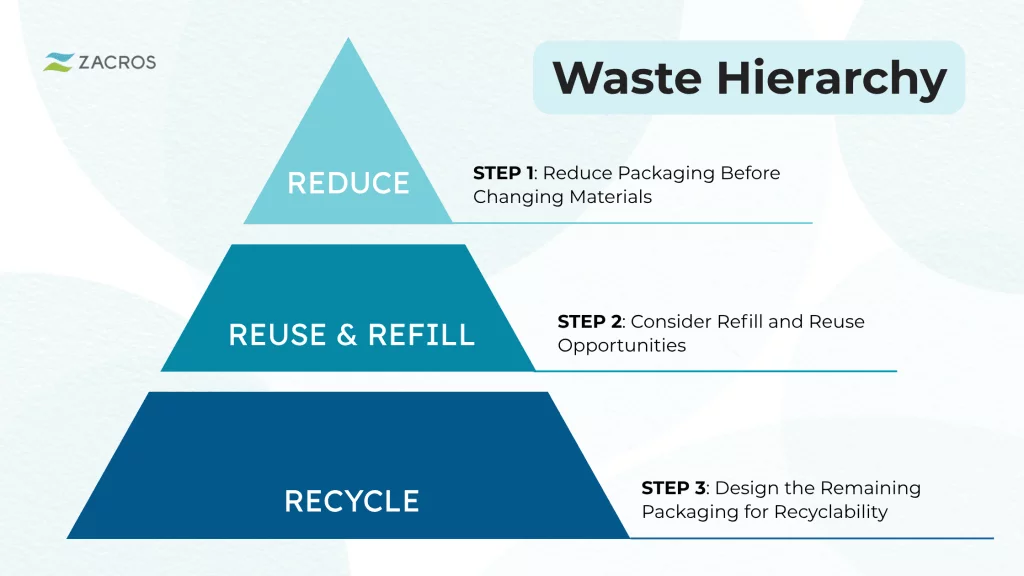
The waste hierarchy principle is simple. The most effective way to reduce waste is to prevent it from being generated in the first place. Reuse comes next because it extends the life of materials already in circulation. Recycling remains an important tool, but it is generally considered a downstream solution after opportunities for reduction and reuse have been explored.
Yet much of the recent packaging conversation has focused heavily on:
- Mono-material packaging
- Recyclability claims
- Recycling infrastructure
- Post-consumer recycled (PCR) content
- Design-for-recycling guidelines
These initiatives are important considerations and will continue to play a major role in advancing circularity. However, many policymakers, brand owners, and industry stakeholders recognize that recyclability alone does not guarantee recycling. Actual recycling outcomes depend on consumer participation, collection, sorting, processing capacity, and end-market demand for recovered materials and recycling alone will not achieve a circular economy.
As a result, rather than focusing exclusively on what happens after packaging is discarded, policymakers are increasingly encouraging companies to minimize packaging at the source by reducing unnecessary materials, promoting reuse and refill systems, and improving resource efficiency.
Why Packaging Reduction Is Becoming a Strategic Priority
Across global markets, packaging legislation is evolving from a recycling focused approach to a broader waste prevention strategy. This shift is supported by real-world examples demonstrating that packaging reduction can significantly reduce environmental impact without relying solely on recycling.

Japan’s refill pouch market offers one of the most notable examples. Beginning in the 1990s, major personal care and home care brands increasingly transitioned from rigid bottles to refill pouch systems, allowing consumers to reuse the original container while purchasing lightweight refills. Over the last two decades, this refill and replace model contributed to a 42% reduction in packaging material consumption in Japan’s personal care and home care markets.
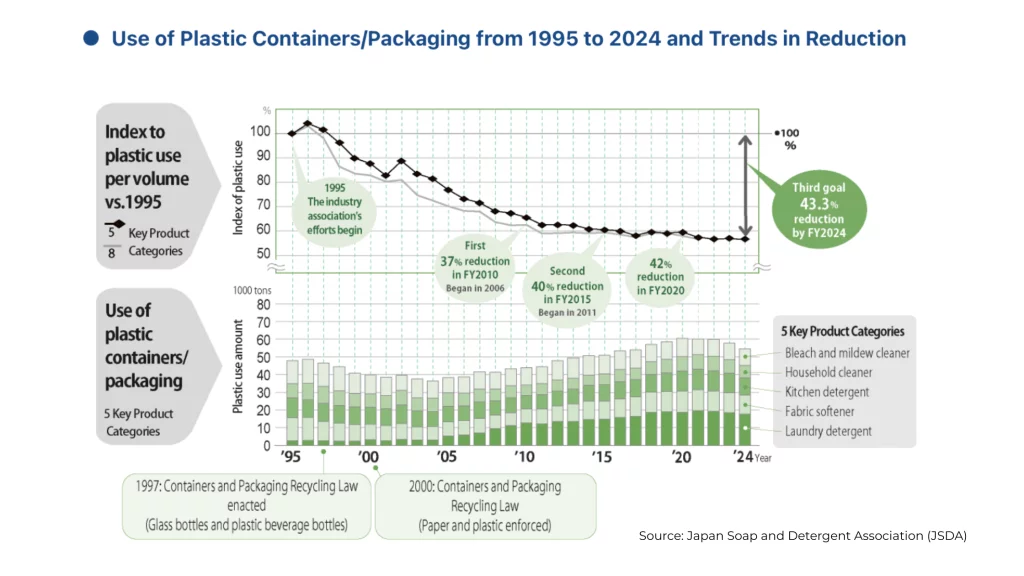
What makes this example particularly relevant is that the environmental benefit was achieved primarily through packaging reduction rather than relying on improvements in recycling infrastructure. By using less material in the first place, brands reduced packaging waste before it entered the waste stream, closely aligning with the principles of the waste hierarchy. As policymakers look for practical ways to reduce packaging waste and resource use, successful models such as refill systems provide real-world evidence that reducing packaging at the source can be both environmentally effective and commercially viable.
Sustainable packaging is increasingly being measured by outcomes rather than intentions. Today, regulators and stakeholders are evaluating whether packaging reduces material consumption, aligns with available recovery infrastructure, and delivers measurable environmental benefits in practice. The waste hierarchy suggests a logical starting point. First reduce unnecessary packaging, then explore refill and reuse opportunities, and finally design the remaining packaging for recyclability.
Step 1: Reduce Packaging Before Changing Materials
When companies evaluate sustainable packaging opportunities, the first instinct is often to focus on new materials or increasing recycled content. However, packaging reduction can take many forms, including lightweighting, eliminating unnecessary components, removing secondary packaging, and optimizing package-to-product ratios.
These strategies can reduce material consumption, transportation emissions, storage requirements, and potentially future compliance costs. However, reducing packaging should never compromise product protection or performance. The goal is to identify opportunities to use less material while continuing to meet the product’s functional requirements.
Step 2: Consider Refill and Reuse Opportunities
Once packaging has been optimized, the next step is to evaluate reuse and refill opportunities. Beyond sustainability benefits, refill systems can create what we call a ‘Refill Benefit Cycle.’ Consumers purchase a primary package once and continue returning for refills, helping reduce packaging material consumption while encouraging repeat purchases. This creates an opportunity to align sustainability goals with long-term business growth. Not every product category is suitable for refill or reuse models. However, brands should evaluate these opportunities before moving directly to recyclability discussions.
Step 3: Design the Remaining Packaging for Recyclability
After reduction and refill opportunities have been explored, recyclability remains an important component of a long-term packaging strategy. As recycling systems continue to evolve, many companies are evaluating recycle-ready packaging formats to help prepare for future regulatory and market expectations.
There may also be a financial incentive to act early. Many EPR programs are moving toward fee structures that consider packaging design and environmental performance. As a result, evaluating recycle-ready packaging today may help brands improve regulatory readiness while potentially reducing future compliance costs.
Questions Brand Owners Should Be Asking Right Now
As regulations continue to evolve, packaging decisions should become more strategic than reactive. Before making packaging changes, consider discussing these questions.
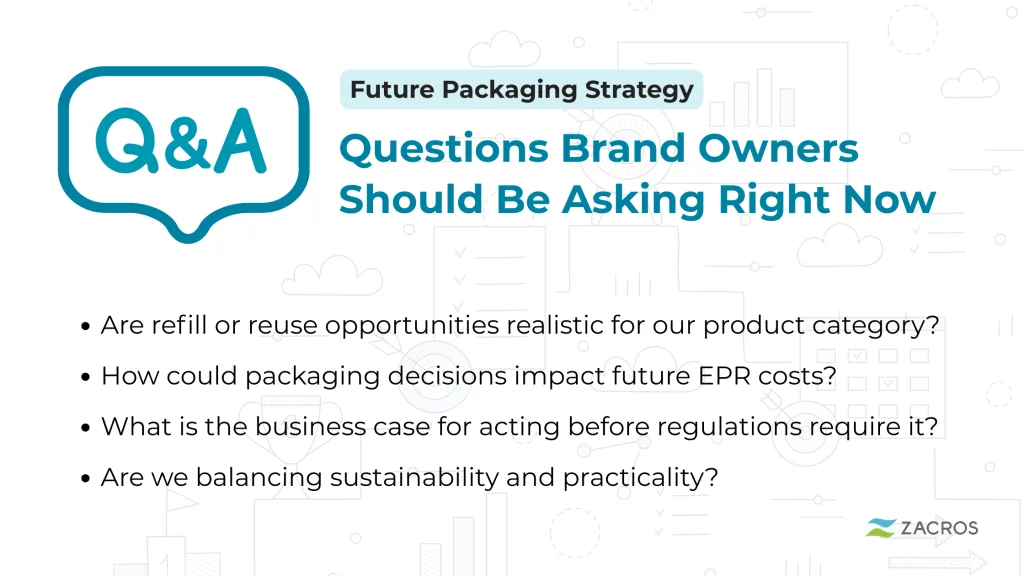
Are refill or reuse opportunities realistic for our product category?
Refill and reuse systems may not be suitable for every product category, but they can be an effective way to reduce material consumption, strengthen customer retention, and support long-term sustainability goals. Evaluating refill and reuse opportunities today may help brands prepare for evolving sustainability expectations and future packaging regulations.
How could packaging decisions impact future EPR costs?
Many EPR programs are moving toward fee structures that consider packaging design and environmental performance. Packaging that is easier to collect, sort, and recover may benefit from more favorable fee treatment than formats that are difficult to recycle. While requirements vary by region, evaluating packaging reduction opportunities and recycle-ready formats today may help brands reduce regulatory costs and avoid more expensive packaging transitions in the future.
What is the business case for acting before regulations require it?
Waiting until regulations take effect can limit packaging options, compress development timelines, and increase implementation costs. Many organizations are beginning to evaluate packaging reduction, refill opportunities, and recycle-ready designs not only for sustainability reasons, but also as a way to improve long-term cost predictability and reduce future compliance risks. By incorporating regulatory considerations into packaging development today, brands may be better positioned to manage both environmental and financial impacts as legislation continues to evolve.
The Opportunity Beyond Compliance
For many companies, new packaging regulations can feel like another item on a growing compliance checklist. Requirements that once seemed years away are increasingly becoming near-term business considerations, particularly for brands operating across multiple markets. As regulations continue to evolve, sustainability is becoming less about a single packaging attribute and more about delivering measurable environmental outcomes across the entire packaging lifecycle.
This transition does not have to happen all at once. The direction of many emerging regulations increasingly mirrors the principles of the waste hierarchy and can be approached as a step-by-step journey.
First, reduce unnecessary material.
Next, evaluate reuse and refill opportunities.
Then, design the remaining packaging for recovery and recyclability.
Companies that begin this journey today may be better positioned to adapt as regulations continue to evolve. By taking one step at a time, brands can make meaningful progress toward sustainability goals while reducing the risk of future redesigns, compliance challenges, and unexpected costs.
Ultimately, the organizations best positioned for long-term success may be those that view packaging not simply as a compliance requirement, but as a strategic opportunity to reduce environmental impact, improve operational efficiency, and prepare for the next generation of packaging expectations.
Not sure where your current packaging stands?
Evaluating performance across your full system, from storage to dispensing, can uncover opportunities for improvement without rethinking your product. Contact us to start a conversation about your next packaging project and discover solutions tailored to your application.