
In recent years, companies, municipalities, and each of us as individuals have increasingly been called upon to make “environmentally friendly choices.” Amid this trend, the method known as “LCA (Life Cycle Assessment)” which scientifically and quantitatively evaluates the environmental impact of products and services has been attracting attention. You might be wondering what LCA all about is and how it stands apart from a carbon footprint.
In this blog, we will explain everything in an easy-to-understand way for beginners from the basic concept of LCA to real-world examples of its application, and even the true meaning behind the phrase “environmentally friendly.”
So, let’s deepen our understanding of LCA through a conversation between Mr. Y, who is interested in environmental topics, and Mrs. I, an LCA expert at ZACROS (certified by SuMPO as an LCA specialist).

Hello, Mrs. I! Recently, while gathering information related to the environment, I often come across the term “LCA.” Since I heard you’re an expert, could you explain LCA to me?

Yes, you’re right. LCA often appears in exhibitions and online articles. LCA stands for Life Cycle Assessment. A “life cycle” refers to the entire lifespan of a product or service, and LCA is a method for quantitatively assessing how that life cycle impacts the Earth and ecosystems.
In recent years, since the many companies set their carbon-neutral goals, we’ve been seeing LCA mentioned even more frequently.
There are two types of LCA: organizational LCA and product LCA. Today, I’ll explain specifically about product LCA.

Figure 1. Organizational LCA (Source: Ministry of the Environment & Ministry of Economy, Trade and Industry – Green Value Chain Platform)

Figure 2. Product LCA (Created by ZACROS)
So LCA is a method of evaluation! What is its purpose?
The purpose of using LCA is to understand the environmental impact of products and services and to improve them in a way that reduces environmental burden.
In recent years, with growing interest in decarbonization and sustainability, more companies are paying attention to emissions across their entire supply chain. In some cases, business partners request LCA data. Responding to these requests can also help build trust with customers and society! In addition to that, LCA can evaluate multiple environmental impact categories beyond global warming, making it an important data foundation for supporting corporate sustainability strategies.
What other environmental impact categories are there besides global warming?
Currently, global warming gets the most attention, but there are many indicators, such as:
- Ozone layer depletion
- Water resource usage
- Biodiversity
- Ecosystem impacts
- Resource depletion
- Acidification
- Eutrophication
- Photochemical oxidants
- Human toxicity
- Ecotoxicity
- Land use
Which indicators to focus on depends on your company’s policies, business characteristics, value chain, and social demands. It’s important to clearly define “what to prioritize” within your company, select the necessary indicators, and proceed with proper evaluation.
So, we need to think about indicators that fit our company. For global warming, does that mean CO₂ emissions?
Exactly. People often refer to it simply as CO₂ emissions, but in reality, it represents all greenhouse gases (GHGs). GHGs include methane, fluorocarbons, and others, each with different warming potential. Therefore, each GHG is converted into CO₂-equivalent and displayed as a total value.
I’ve also heard the term Carbon Footprint (CFP). I thought it was about CO₂ emissions. Is it actually about GHG emissions? And how is CFP different from LCA?
CFP stands for Carbon Footprint of Products. As I mentioned, LCA covers multiple environmental impact categories, but CFP focuses only on global warming specifically GHG emissions.
To summarize simply, here’s the diagram:

Figure 3. Differences in Scope between LCA and CFP (Created by ZACROS)
There are cases where companies attach tags to products showing the calculated CFP (Carbon Footprint of Products) per item, making it easy for general consumers to understand and appealing to them.
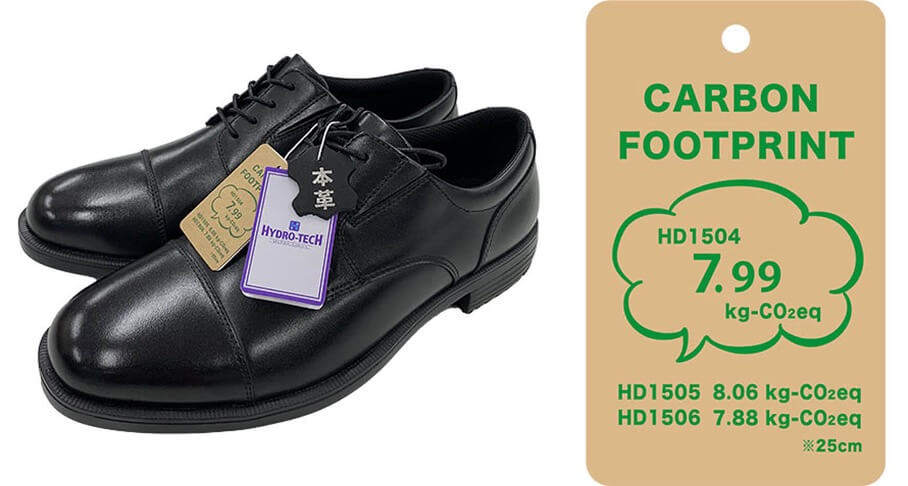
Figure 4. Example of CFP Display (Source: Ministry of the Environment, Japan – Decarbonization Portal, CFP Introduction Guide)
I see! So, CFP is specifically focused on global warming. By the way, we often hear the phrase “environmentally friendly,” but from the perspective of LCA, what does that really mean?
The phrase “environmentally friendly” alone doesn’t tell us how good something actually is for the environment.
By using LCA, we can clearly show which indicators are used and how much environmental impact is reduced across various impact categories.
Recently, advertising claims of being “environmentally friendly” without evidence, known as greenwashing, have become a problem. With LCA, we can provide scientifically grounded information that people can trust.
So, when a company says, “This package is sustainable,” what should we check from an LCA perspective?
Key points to check include:
- Is the evaluation based on the entire life cycle?
- Are multiple environmental impacts considered?
- Is the calculation method appropriate?
- When comparing, are the same conditions and methods used?
Each of these points has more detailed aspects that should be verified.

That’s a lot to check! ZACROS is a packaging manufacturer. How effective is packaging lightweighting from an LCA perspective?
If weight can be significantly reduced, it has an impact across the entire product life cycle.
Lightweighting reduces material usage, which lowers environmental burden from crude oil extraction (plastic packaging) to material production, and also reduces fuel consumption during transportation and impact at disposal.
ZACROS is actively working on lightweighting, and you can find examples of refill pouches on our website for reference.
Wow, the benefits of lightweighting are bigger than I imagined!
However, if lightweighting goes too far and the packaging loses its ability to protect the product, the product may get damaged and the packaging can’t fulfill its intended function.
Also, changing materials can affect barrier properties and recyclability.
Lightweighting is an effective approach, but remember that a balanced design is key.

I see, it’s not just about making things lighter. ZACROS has been researching packaging for many years, so this seems to be one of your strengths! Thank you for teaching me about LCA today! The scientific evaluation behind “environmentally friendly” is much deeper than I expected.
That’s right. I’m glad you understood the basic concept of LCA. However, when you actually try to apply LCA, you’ll face many practical challenges.
So the theory is clear but putting it into practice seems much harder.
Exactly. There are many things to consider, including collecting data, choosing evaluation indicators, and interpreting results. Once you start working on it, many questions will arise.
Next time, let’s talk specifically about these practical challenges.
Thank you! When I start working on this, I’ll probably have more questions. Looking forward to next time!
Are You Ready to Explore Sustainable Packaging for your Products?
ZACROS has provided quality flexible packaging for beauty liquid products for over 25 years. We have an intensive chemical compatibility database to find you with a suitable packaging solution. Contact us today to learn more.