
As sustainability goals accelerate across industries, non‑food brand owners are increasingly evaluating flexible pouches as an alternative to rigid packaging formats such as bottles, jars, tubs, and canisters. Across categories like beauty, personal care, home care, pet care, and auto care, flexible packaging offers a meaningful opportunity to reduce material usage, improve logistics efficiency, and lower overall environmental impact.
Still, transitioning away from rigid packaging is not always a simple decision.
From premium shelf presence and product performance to operational readiness and consumer perception, many non‑food brands share similar concerns when considering flexible pouches for the first time. Most of these concerns can be addressed through intentional design, material selection, and the right operational approach.
Below are some of the most common concerns brand owners face and key takeaways to consider before making the switch.
1. Shelf Appearance:
The concern:
Will a flexible pouch make my product look less premium in retail or online environments?
What brand owners should know:
Flexible pouches are sometimes associated with low-cost or commodity products. However, modern flexible packaging has evolved significantly. Today’s pouches can be engineered to achieve a high-end look and feel, including:
- Custom structures that provide stiffness and a premium hand feel
- Matte, soft-touch, or gloss finishes for a luxury aesthetic
- High-definition digital or rotogravure printing with rich colors and sharp details
- A wide range of closures, fitments, and dispensing options tailored to product use
In categories such as beauty, personal care, and home care, flexible pouches are increasingly used for both primary packaging and refill formats. When designed intentionally, flexible pouches can stand out just as much as or even more than rigid packaging, while supporting a modern and sustainable brand image.
Key takeaway:
Premium appearance is driven by design and materials, not by packaging format.
2. Product Protection & Shelf Life
The concern:
Can a flexible pouch protect my formulation as well as rigid packaging?
What brand owners should know:
Flexible pouches are highly customizable from a performance standpoint. Multi-layer structures can be engineered to deliver:
- Strong moisture and oxygen barriers for stability-sensitive formulations
- Light protection for UV-sensitive products
- Chemical compatibility with a wide range of personal care, household, and wellness formulations

Unlike rigid packaging that introduce air into headspace during repeated use, flexible pouches collapse as product is dispensed. This reduces ongoing exposure to oxygen and contaminants, helping maintain product integrity over time. At the same time, monomaterial pouch formats are rapidly evolving, with new film technologies improving barrier properties.
Key takeaway:
With the right structure, flexible pouches can meet or exceed the protection requirements of rigid packaging.
3. Sustainability & Recyclability Confusion
The concern:
Does switching to a flexible pouch actually improve sustainability?
What brand owners should know:
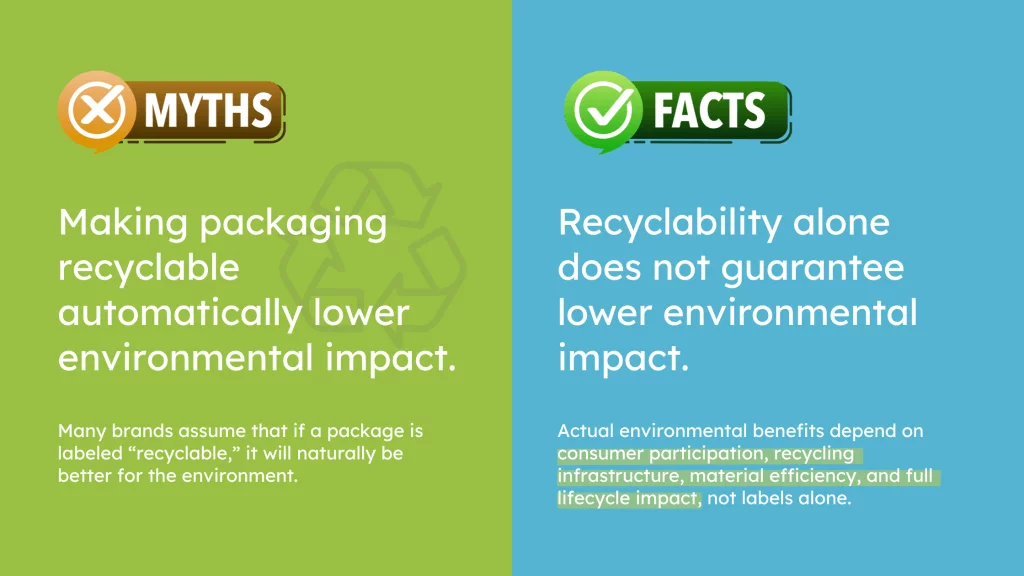
Sustainability goes beyond recyclability alone. Flexible packaging offers measurable environmental benefits, including:
- Significant material reduction (often up to 70-80% less plastic than rigid formats)
- Lower transportation emissions due to lighter weight and better cube efficiency
- Growing availability of monomaterial structures
While packaging design can enable recyclability, actual recycling outcomes depend on consumer behavior and access to appropriate collection and recycling infrastructure. In addition, flexible pouches support refill and concentrate models that are gaining traction in beauty, personal care, and home care categories, helping brands reduce single‑use packaging while strengthening sustainability claims.
Key takeaway:
When designed intentionally, flexible pouches can meaningfully reduce overall environmental impact.
4. Filling Line Compatibility & Operational Changes
The concern:
Will switching to flexible pouches require major equipment changes?
What brand owners should know:
Many brands transitioning to flexible pouches do not start with in‑house equipment. Instead, they leverage co‑packers with established pouch‑filling capabilities to test, launch, or scale without upfront capital expense. This approach allows brands to:
- Enter flexible packaging with minimal operational risk
- Validate pouch formats, materials, and shelf performance, and consumer response
- Scale production volumes as demand grows
For brands that later bring pouch filling in‑house, equipment options range from small‑batch to high‑speed systems, allowing a phased and strategic transition rather than a one‑time overhaul.
Key takeaway:
Switching to flexible packaging does not require immediate equipment ownership. Most brands successfully start with co‑packing and scale operations over time.
5. Consumer Experience & Usability
The concern:
Will consumers trust and enjoy using a flexible pouch as much as traditional rigid packaging?
What brand owners should know:
Across various categories, consumers prioritize ease of use, safety, storage efficiency, and confidence in product performance over packaging format. When sustainability is paired with convenience, consumer acceptance increases significantly.
Key takeaway:
As consumers embrace flexible pouches and refill concepts, brands gain opportunities to strengthen loyalty and drive repeat purchases through convenience and sustainability.
Final Thoughts: Flexible Packaging Is a Strategic Upgrade
Switching from rigid to flexible packaging is a strategic brand decision that impacts sustainability, logistics, consumer perception, and shelf presence.
With the right pouch structure, materials, and printing technology, flexible packaging can:
- Deliver a premium brand presence
- Protect formulation performance
- Reduce environmental impact
- Enhance consumer experience
For brand owners committed to sustainability without compromising brand integrity, flexible pouches offer a proven and reliable solution. By thoughtfully addressing design, material selection, and operational considerations, brands can confidently transition from rigid to flexible packaging. As consumer acceptance continues to grow and pouch technologies advance, flexible packaging delivers lasting value for both brand positioning and business performance.
Are You Ready to Explore Sustainable Packaging for your Products?
ZACROS has provided quality flexible packaging for beauty liquid products for over 25 years. We have an intensive chemical compatibility database to find you with a suitable packaging solution. Contact us today to learn more.